Leadership programme for managers in tech companies
Managers who handle the hard conversations themselves.
Most new managers in tech know what needs to be said, and put it off. So it lands on the CTO, or on HR. Over 12 weeks I work with your managers on the real conversations they're avoiding, and we measure in week 1 and again in week 12 whether they now handle them.

- 300+
- engineers in the organisation where I built the leadership practice
- 8.4/10
- participants' rating of my leadership programme for usefulness
- 60+
- leaders through the programmes I designed and ran at CloudLinux
Where I've designed and run training for managers and leads: CloudLinux / TuxCare · Godel Technologies · Profitero
Built for the three people who end up holding the problem
CTO or Head of Engineering
What you see now
Your leads are strong engineers. The people side still lands on you: the underperformer nobody has spoken to, the senior who ignores priorities, the burnout you hear about too late.
What changes
Your leads practise these conversations on their own real cases, then have them. We count how many people issues still reach you each week.
HR Director or Head of People
What you see now
Managers hand HR conversations they should have had themselves. One-to-ones and reviews happen when you chase them.
What changes
Managers hold the conversation first and bring HR in when it's needed. One-to-ones happen without chasing, and you get a before-and-after report that fits your review cycle.
Head of L&D
What you see now
Course ratings look fine, but you can't show that anyone behaves differently.
What changes
The programme is mapped to your competency framework, and behaviour is rated in week 1 and week 12 by the manager, their own manager and their team. That's Kirkpatrick level 3, in a written report you can take to the leadership team.
What I measure
Three numbers, counted in week 1 and again in week 12.
Most leadership programmes report how participants rated the course. That shows whether people enjoyed it, not whether they now behave differently. I measure behaviour, and you can check every number yourself.
People issues that reach you each week
You and I log them over one normal week, at the start and again at the end.
One-to-ones held without anyone chasing
Counted from calendars or your one-to-one tool. Quarterly conversations count too, if that's your cadence.
The gap between how a manager rates themselves and how others rate them
Each manager, their own manager and one person from their team rate the same core skills.
The programme
How the quarter runs
Weeks 1–2
The starting point
Each manager rates themselves on the core skills of the role. Their own manager and someone from their team rate them too. Together we count how many people issues reach you in a normal week. At the end of week 2 you get a 3–4 page report: what I found, and the three things to work on first.
Weeks 3–11
Group sessions
Five 90-minute sessions, one every two weeks. Each session starts with a conversation one of the managers is putting off. We prepare it and practise it in the session. They have the real conversation that week and tell the group how it went next time. Between sessions, each manager has a short exercise and a partner from the group to check in with.
Alongside
1:1 coaching
For two or three managers you name, or for you.
Week 12
Measure again
We repeat the ratings and the count. You get a short report on what changed and what still needs work.
What you get in week 2
At the end of week 2 you get a 3–4 page report. Here's what the first page looks like.
Starting-point report · Example
People issues reaching the CTO in a normal week: 11
Self-rating vs team rating (1–5)
Three things to work on first
- 1. Feedback that names the behaviour, not the person.
- 2. One-to-ones that aren't status updates.
- 3. Delegating without taking it back.
What the sessions cover
The week-2 report decides the order, and which topics get more time.
- Holding people to what they agreed
- Delegating without taking it back
- Feedback people can act on
- One-to-ones that aren't status updates
- Conflict between people on the team
- Spotting performance dips early
- Owning the team's numbers
- Staying steady under pressure
Inside a session
Session exercise
Facts vs interpretations
Separate opinions and feelings from what actually happened.
Interpretation
Fact
“Sarah is lazy.”
Sarah missed two of the last three deadlines.
“Raj doesn't care about code quality.”
Raj skipped code review on four pull requests this month.
“Mei is afraid of criticism.”
Mei hasn't asked for feedback since the last release.
“Tom wants to be a leader.”
Tom answers newcomers' questions in the team chat.
Session exercise · Management 3.0
Seven levels of delegation
- The team decides. I don't need to know.
- The team decides, then explains it to me.
- I give my view. The team decides.
- We decide together. My vote counts the same.
- I hear the team out, then I decide.
- I decide, then win the team over.
- I decide and announce it.
Fits what you already have
Your competency framework
I map the sessions and the ratings to your framework and levels, so the results feed straight into reviews and promotion decisions. No framework yet? I use a core set of manager skills you can keep afterwards.
EOS
I use what you already run: the Scorecard, Rocks, the Issues List and Quarterly Conversations. I sit on the leadership team of a company that runs on EOS. I'm not an Implementer, and I work alongside yours.
Your rhythm
I work with your one-to-ones, goals and review cycle as they are. Your managers don't have to learn a new framework.
Case study
CloudLinux / TuxCare: building the leadership practice for a 300+ engineer organisation
The situation
Engineers were being promoted to team lead with little support on the people side. One-to-ones were ad hoc and not seen as part of a manager's job. Pay rises were decided on request.
What I did
Surveyed 31 engineering leads to set priorities, then designed and taught an eight-module programme: feedback, delegation, situational leadership, trust, goal setting, emotional competence, communication and leading change. Ran monthly manager clinics on live cases, and workshops on difficult conversations and performance reviews. Built competency frameworks for 9+ engineering roles across grades G1–G7, and a competency-based grade review to replace raises on request.
What changed
- 8.4/10
- usefulness rating for the programme, which ran in repeat cohorts through 2025
- 60+
- leaders through the programmes
- 93%
- of surveyed managers holding regular one-to-ones*
- 57
- competency-based grade reviews, covering about 80% of roles
*Self-reported, follow-up survey of 40 managers, 67% response rate.
As Agile Coach, then Director, Agile Strategy & Transformation, CloudLinux, 2023–2026.
What managers say
“Bringing a senior back to business priorities or motivating a mid-level engineer to develop are not easy conversations. People rarely object to a manager openly, so a poorly delivered message turns not into an argument but into hidden sabotage or the risk of losing the employee. Today I have these conversations without those consequences.”
“After your course I started paying more attention to the content of one-to-ones, and seeing more clearly the reason behind performance dips. I started picking up signals in my constantly burning-out team member earlier than he did himself.”
“The Leadership course Diana put together for the CloudLinux / TuxCare team leaders was a treasure trove. Lots of hands-on help for new leaders as well as science-founded theory, and practical examples to help them on their way. Highly recommended!”
About me
From doing the work to managing the people who do it.
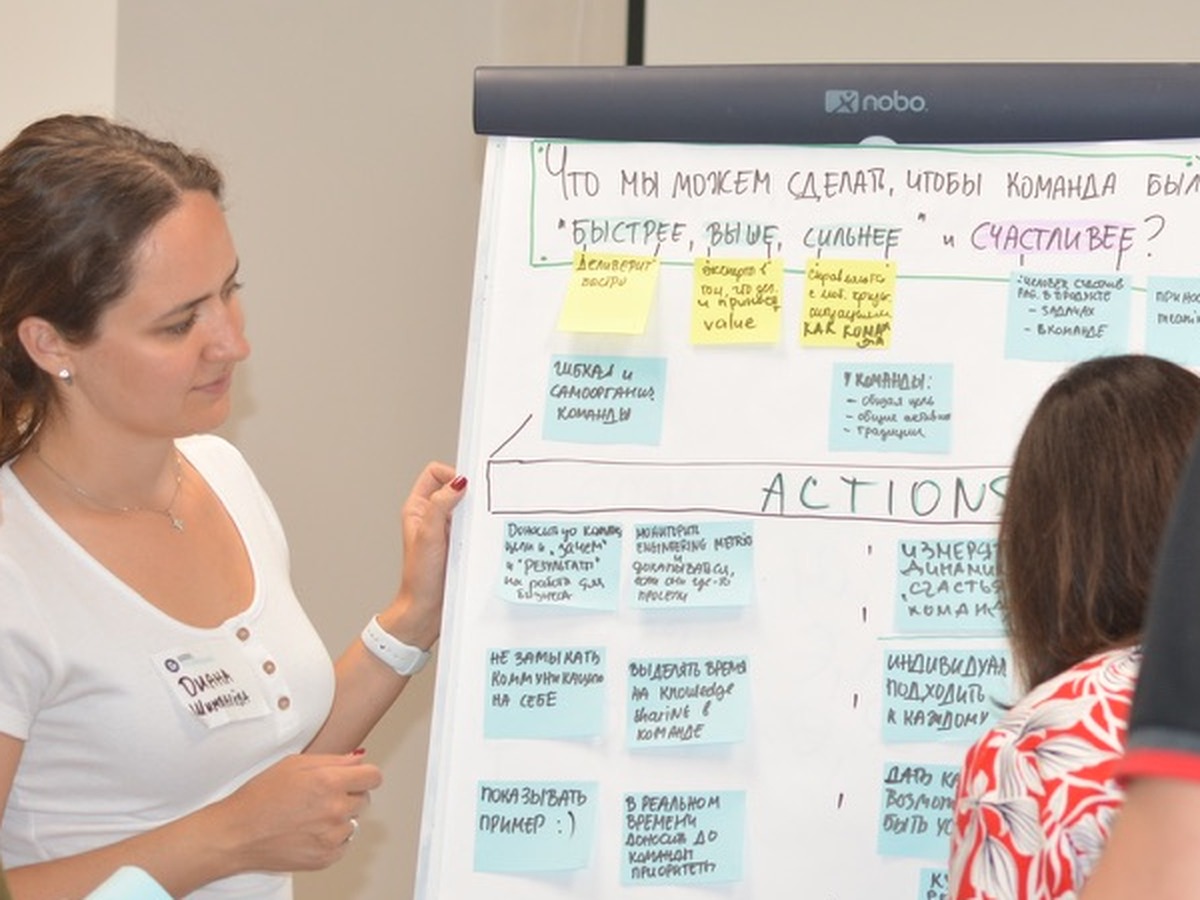
I started as a software tester in 2013 and spent the next 13 years in tech companies: delivery, then leading people, then running a department.
At CloudLinux I led the change management department, about ten change managers and three people managers, across an engineering organisation of 300+, and built its leadership practice from nothing. I'm now Head of Digital and People at Bali Love, on a leadership team that runs on EOS.
Certified in Management 3.0, as an ICTA Transformational Coach (200 hours), and in Agile Team Facilitation (ICAgile).
Two ways to join
6–8 managers
An in-house group
- 6–8 managers from your company
- Sessions built on your own cases
- Founding groups start February–March 2027
1–3 managers
An open group
- For companies with one to three managers
- The same quarter, with managers from other companies
- The next group starts when it fills
How we start
01
Discovery call
30 minutes. You tell me what keeps landing on you, and I tell you whether this programme will help.
02
A written plan
One page with the plan and the price, within two working days.
03
Confirm a start
I hold a start date for 7 days, since I only run a few groups at a time.
04
Begin
The quarter is paid upfront, with a full refund if you change your mind in the first 7 days.
Need someone else to sign off?
Book the call anyway. Afterwards I'll send you a one-page summary of the problem and the plan that you can forward to your CEO, CFO or owner.
Questions
How much does it cost?
The price is fixed for the quarter. It depends on group size and how much 1:1 coaching you want. You get it in writing, on one page, within two working days of the call.
How much of my managers' time does it take?
A 90-minute session every two weeks, plus a short exercise between sessions. Nobody is away from work for whole days.
How much of my time does it take?
Two meetings with me, one at the start and one at the end, plus your ratings in week 1 and week 12.
Is it online?
Yes. Sessions are live online, in Australian and Asian business hours, in English or Russian.
Can it follow our competency framework?
Yes. I map the sessions and ratings to your framework and levels. If you don't have one, I use a core set of manager skills you can keep.
Who sees the ratings?
Each manager sees their own results. You get the group results and the before-and-after counts. Anything more detailed is agreed with you and the managers before we start.
What if it doesn't work?
I don't promise you'll hit your targets. You'll see, in numbers, whether your managers now handle these conversations themselves, and what still needs work. If you change your mind in the first 7 days, you get a full refund. After that the dates are kept for your group, so there are no refunds.
What happens after the quarter?
If you want coaching to continue, it's a flat monthly fee. When you have a new group of managers, you can run another quarter.
Tell me which conversations keep landing on your desk.
A 30-minute discovery call.